

A wedding sound system has to do two quite different jobs in one day. The ceremony is speech: vows, readings, and an officiant who must be heard by every row without shouting. The reception is music: speeches, a first dance, and a floor that fills after dinner. Planning a single setup for both is the most frequent cause of wedding PA speaker disappointment. This checklist separates the two.
Part one: the ceremony is a speech problem
Ceremony audio fails in predictable ways — vows spoken quietly and away from any microphone, an officiant competing with wind, guests in the back rows watching a moment they cannot hear. Volume is rarely the fix. Intelligibility is.
What actually helps:
- A microphone close to the speaker's mouth. Distance is the enemy of clarity. A mic two feet away picks up dramatically more room and wind than one at six inches.
- A speech-oriented EQ setting. Music presets boost bass that muddies consonants. Speech modes clear the midrange where intelligibility lives.
- Speakers ahead of the microphone. Place cabinets forward of the mic position, angled toward guests. This is the primary defence against feedback.
- A power plan that does not depend on the venue. Garden and beach ceremonies rarely have a convenient outlet where you need one.
The P10 suits this job specifically: it is a 10-inch battery PA that ships with a UHF wireless microphone system and a padded carry bag in the carton, with DSP presets including a speech mode. That combination is why planners and officiants reach for it — the mic is part of the kit rather than a separate purchase to remember.


Outdoor ceremonies: plan for no walls
Indoors, walls and ceilings reflect sound back toward guests. Outdoors, that reinforcement disappears entirely and your sound travels away. Budget more headroom than the guest count suggests.
- Position speakers closer to guests rather than raising the volume from far away.
- Put the wind at your back where possible — wind noise across a microphone is difficult to fix after the fact.
- Charge every battery fully the night before and verify levels on site, not in the car.
- Walk to the back row and listen. It is the only test that counts.
Part two: the reception is a music problem
Once dinner ends and dancing starts, the requirements invert. Now you need sustained output, even coverage across a floor, and low end that survives a full room absorbing it. This is powered PA territory — the S15 class of cabinet, a 15-inch two-way powered PA with 400W RMS / 800W Peak and dual combo inputs for a DJ or band feed.
Coverage notes for receptions:
- Two speakers on stands, angled across the floor, beats one loud speaker every time.
- Keep cabinets away from the head table and the elderly-guest tables. Nobody enjoys dinner beside a tweeter.
- Dinner-volume music and dance-volume music are different settings. Plan the transition rather than discovering it.
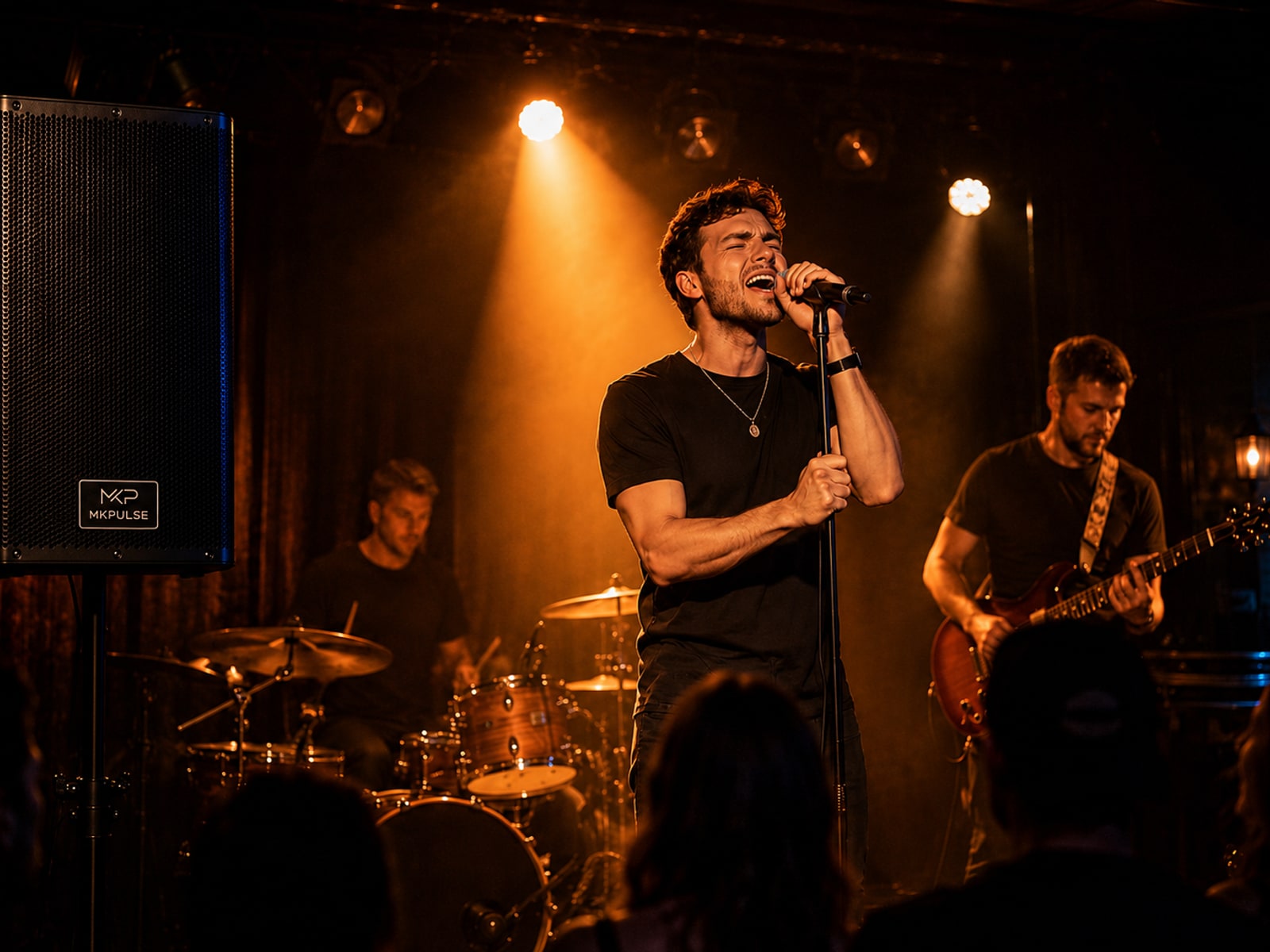
Zoning a wedding: the approach that works
Experienced planners treat a wedding as two or three audio zones rather than one system stretched thin:
- Ceremony zone — battery PA with a wireless mic, positioned for speech.
- Cocktail zone — background music at conversation level, often a separate compact speaker so guests can still talk.
- Reception zone — powered PA for speeches and dancing.
Zoning also removes the day's most stressful moment: tearing down and rebuilding a single system between the ceremony and the reception while guests are waiting.
Run-of-show checklist
- Night before — charge everything, pack spare batteries for microphones, confirm the mic works.
- On arrival — set up the ceremony zone first. It happens first and has the least margin for error.
- Sixty minutes out — talk-test from the exact vow position; listen from the back row.
- Thirty minutes out — confirm the officiant knows how to hold the microphone and how close to keep it.
- Cocktail hour — verify the reception zone while guests are elsewhere and noise is masked.
- Before speeches — hand off the mic with a five-second briefing and check the level once more.

Choose the right MKPULSE speaker
- MKPULSE P10 — 10-inch battery PA for hosted, mobile events.
- MKPULSE S15 — 15-inch powered PA for dance floors and larger rooms.
- MKPULSE VIBE 6 — dual 6.5-inch Bluetooth party speaker with dynamic RGB.
- Compare all three models side by side before you decide.