

Two portable speakers can suit very different nights, so the best comparison begins with the event rather than a headline feature.
Begin with the actual job
The MKPULSE VIBE 6 and P10 are both portable options, but portability is only the first similarity. The right choice depends on what the event asks you to do. If the goal is party atmosphere, playlist flexibility, dynamic RGB lighting, and casual wired-mic moments, the VIBE 6 is the relevant product. If the goal is a portable battery PA with an included UHF wireless mic, Bluetooth 6.0, DSP presets, and a carry bag, the P10 is designed for that more direct sound-support role. Start with the job, not the shape of the speaker.
Choose VIBE 6 for party energy
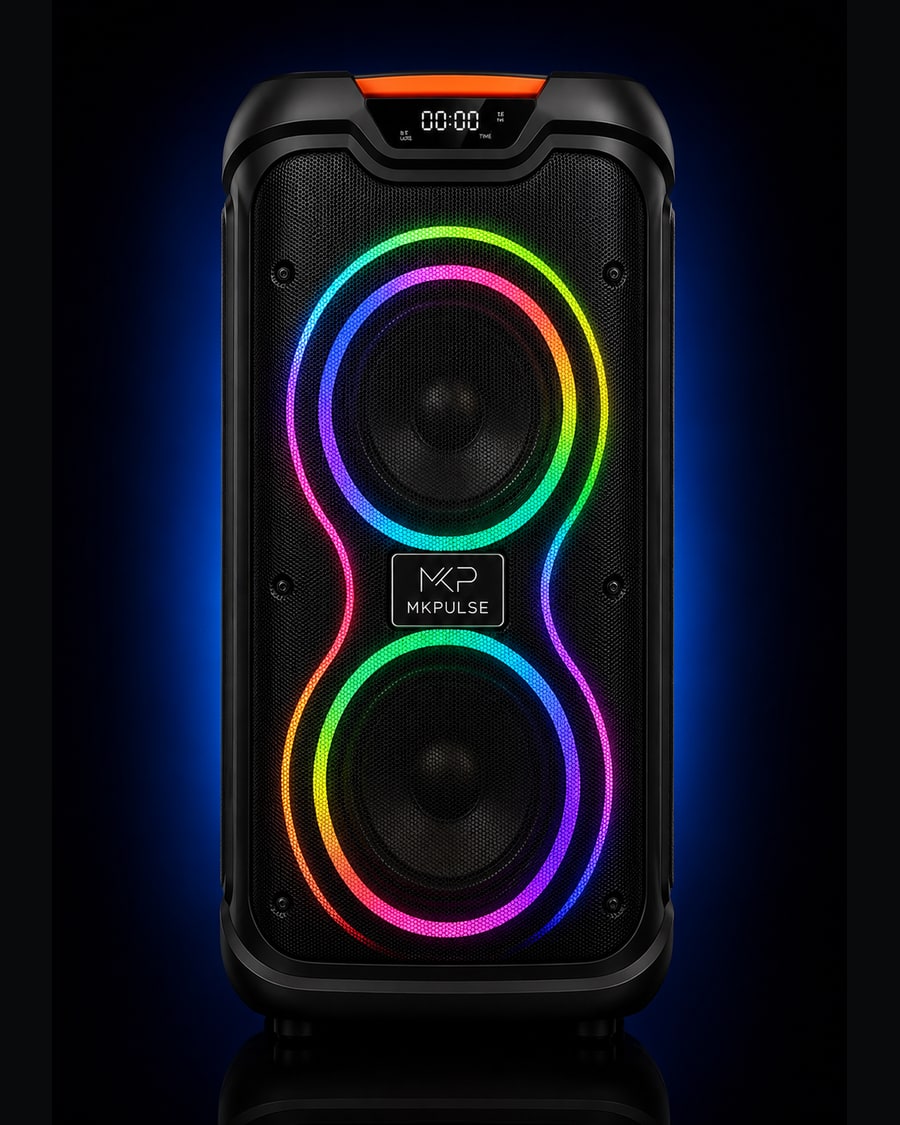
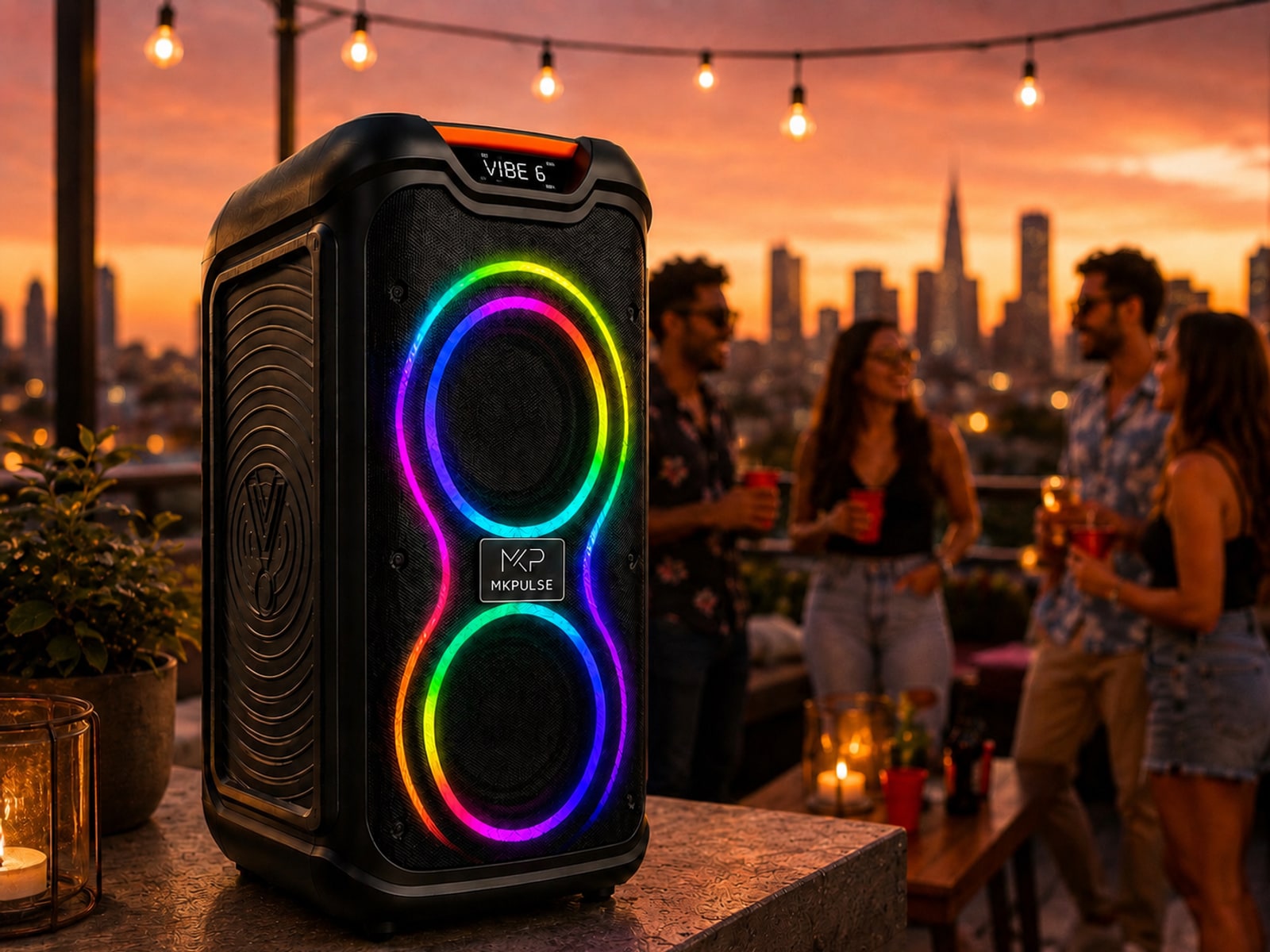
The VIBE 6 is a portable party speaker with dual 6.5-inch drivers and dynamic RGB lighting. It is built for the feeling of a social night: music near the patio, a poolside playlist, a game room, a living room gathering, or casual karaoke. Bluetooth with TWS, USB, microSD, AUX, and FM provide flexible playback choices. a wired microphone input let people join in without turning a fun gathering into a complicated sound system. It is a strong fit when the music and mood are the main program.
Choose P10 for mobile PA needs
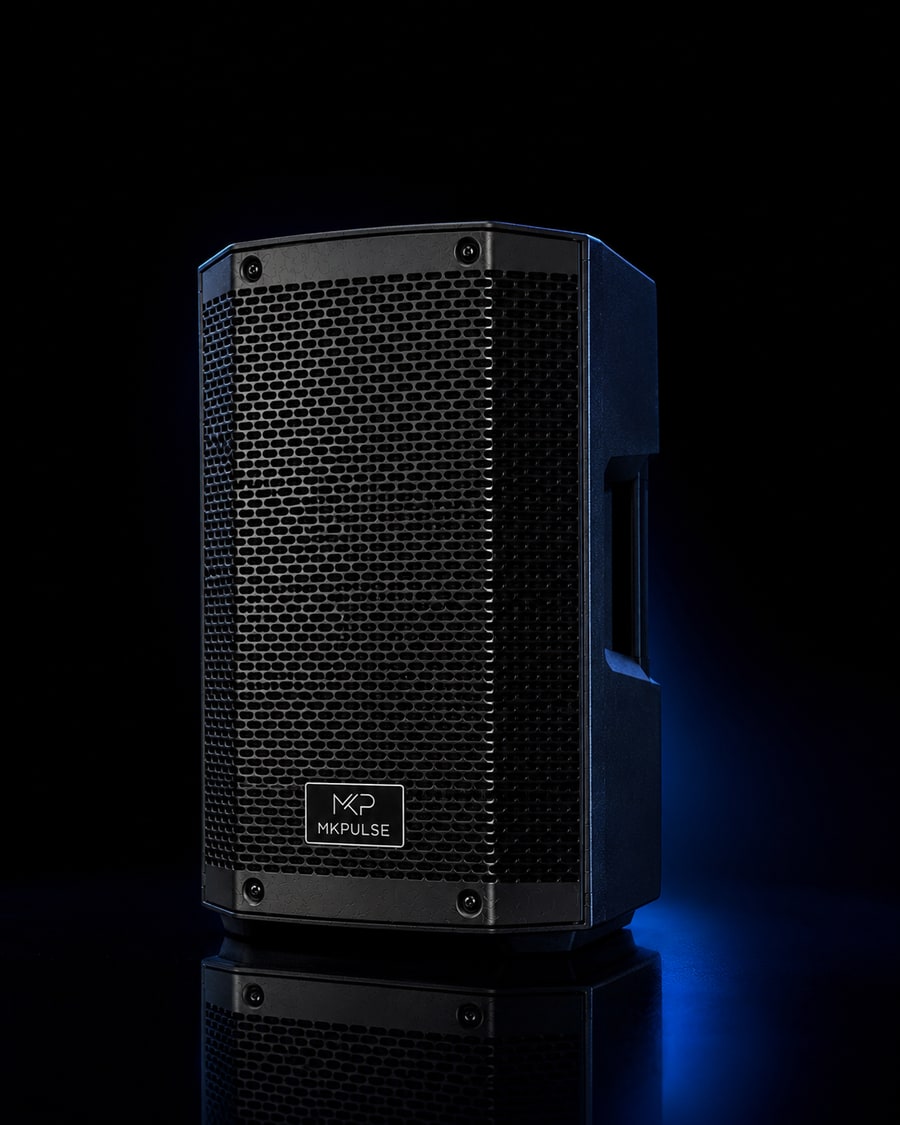
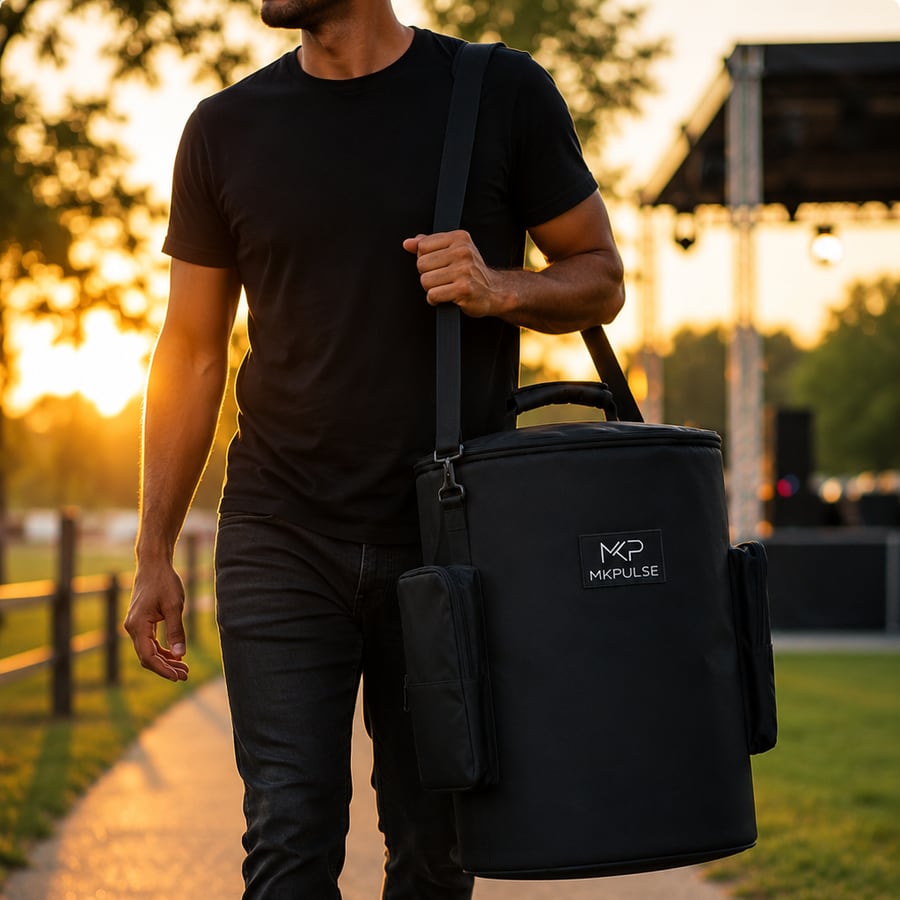
The P10 is a portable battery PA with a 10-inch format, Bluetooth 6.0, 160W RMS and 500W Peak peak specifications, an included UHF wireless mic, an included carry bag, DSP presets for Music, Vocal, and Speech, and TWS pairing. Those details are practical when a host, instructor, performer, or organizer needs a self-contained setup that can move to the job. The included wireless mic in particular changes the workflow for announcements and spoken moments. P10 is about helping people hear the program clearly with minimal load-in friction.
A quick check before you continue
- Start at a moderate level and listen from the audience area.
- Change one setting at a time so you can hear what helped.
- Keep the setup focused on the people and the program.
Compare microphone needs honestly
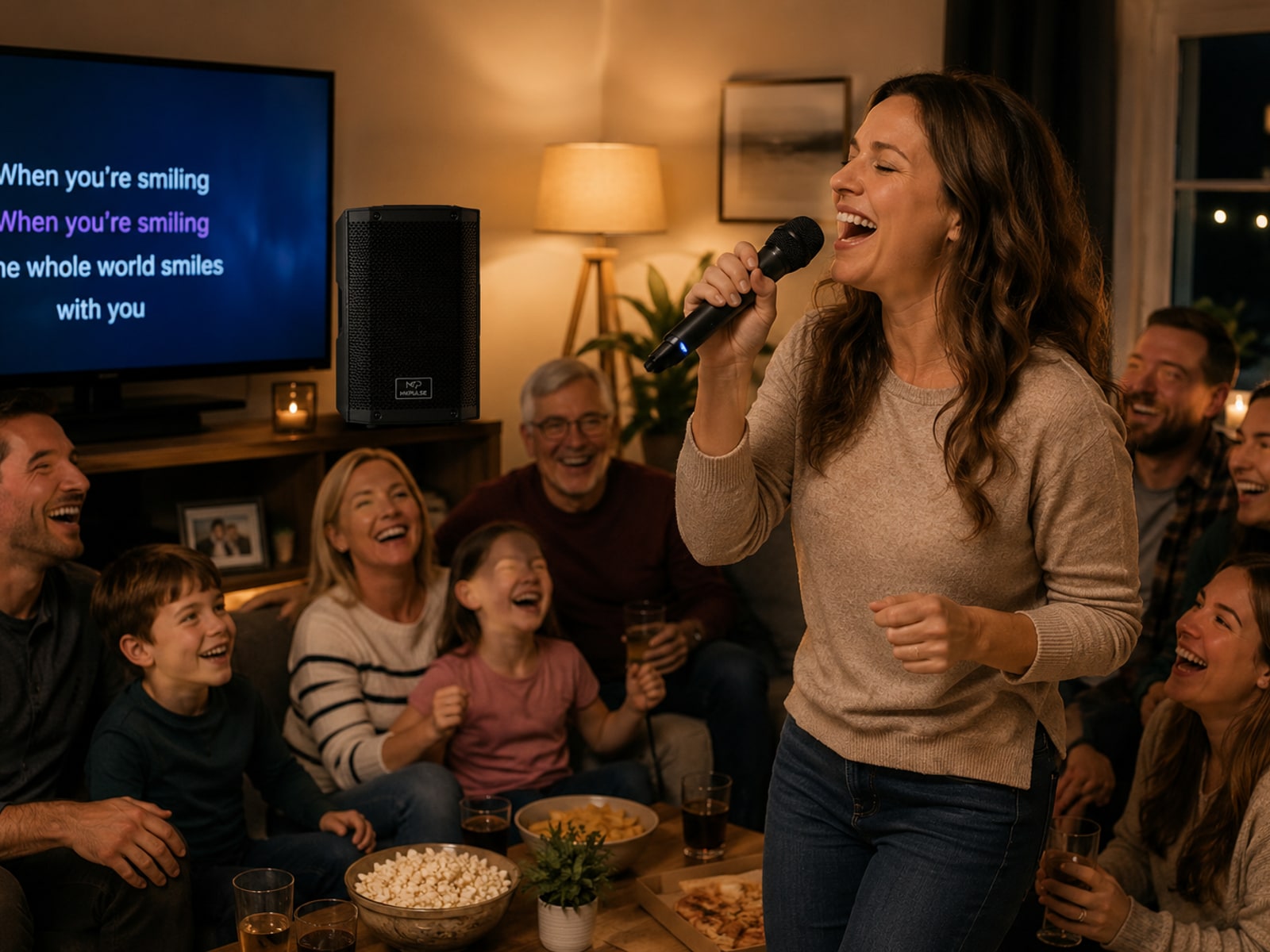
The microphone question often makes the decision easy. The VIBE 6 has a wired microphone input, which suit casual karaoke or a simple host moment when wired microphones are appropriate. The P10 includes a UHF wireless mic, which is useful when someone needs freedom to move while addressing a small group. Neither option is automatically better; they are designed for different ways of participating. Ask who will speak, where they will stand, how often the mic will be used, and whether the event benefits from a wireless format already included in the system.
Compare playback priorities
For a party-first setup, VIBE 6 provides Bluetooth, USB, microSD, AUX, and FM alongside TWS. That menu makes it easy to choose the source that suits the occasion. P10’s Bluetooth 6.0 and TWS pairing support flexible playback within a portable PA workflow. The deciding factor is not merely the wireless version or number of source modes. It is whether you need the speaker to be the center of a party atmosphere or the dependable audio anchor for a program that includes music, speech, and movement.
Compare the visual role
Dynamic RGB lighting is a central part of the VIBE 6 experience. It brings visual energy to a party space and makes the speaker feel connected to the mood of the room. The P10’s role is more functional: position it for clear coverage, use its DSP presets to match Music, Vocal, or Speech, and keep the focus on the people using it. If lights are an important part of why you are choosing a speaker, VIBE 6 makes sense. If clear portable PA support is the priority, P10 is the more direct answer.
Do not invent a wattage comparison
It is tempting to reduce every speaker comparison to a wattage number, but that is not a useful or accurate way to compare these two products. The P10 publishes 160W RMS and 500W Peak peak. The VIBE 6 should be chosen for its stated party-speaker features—dual 6.5-inch drivers, dynamic RGB lighting, flexible playback, TWS, and a wired microphone input—not an assumed or invented power claim. A clear comparison respects what each product is built to do instead of forcing both into the same marketing shorthand.
Consider the next event too
Think about the kinds of occasions you expect to host most often. A social home setup that moves between rooms, patio, and pool deck may get more value from the VIBE 6’s lighting and source flexibility. A calendar of classes, backyard announcements, community gatherings, and hosted events may benefit from the P10’s battery PA format, included UHF wireless mic, carry bag, and DSP presets. Both have TWS pairing available for a broader two-speaker setup. The right purchase is the one you will use confidently rather than the one with the most abstract features.
Make the choice clear
Choose VIBE 6 when the brief is portable party energy: dual 6.5-inch drivers, dynamic RGB lighting, Bluetooth with TWS, USB, microSD, AUX, FM, and a wired microphone input. Choose P10 when the brief is a portable battery PA: 10-inch format, Bluetooth 6.0, 160W RMS and 500W Peak peak, an included UHF wireless mic and carry bag, Music/Vocal/Speech DSP presets, and TWS pairing. Both are portable. Their most useful difference is the kind of night they are ready to support.
Choose by the person using it
Imagine who will interact with the speaker most often. A party host choosing songs, changing the mood with RGB lighting, and inviting friends to karaoke will find the VIBE 6’s Bluetooth, USB, microSD, AUX, FM, and a wired microphone input relevant. A teacher, organizer, or host who needs a mobile sound system for announcements will see more value in the P10’s portable battery PA design, included UHF wireless mic, carry bag, Bluetooth 6.0, and DSP presets. The deciding factor is often the user’s routine, not an abstract feature contest.
Consider how the event moves
A party may shift from a living room to a patio and back again, making VIBE 6’s visual presence and flexible music sources appealing. A hosted program may shift from music to a toast, an announcement, or a vocal moment, making P10’s Music, Vocal, and Speech presets and wireless mic workflow more useful. Both products offer TWS pairing when a larger coverage area is needed. Think about the sequence of the night, then choose the speaker that helps those transitions happen without adding a complicated second system.
Compare specifications with care
The P10 publishes 160W RMS and 500W Peak peak, which are useful specifications for comparing its portable PA role. The VIBE 6 should not be assigned an invented wattage simply to force a numerical matchup. Its listed strengths are different: dual 6.5-inch drivers, dynamic RGB lighting, Bluetooth with TWS, USB, microSD, AUX, FM, and a wired microphone input. A careful comparison treats those as real capabilities rather than pretending every product serves the same assignment. The better choice is the one whose stated features solve your actual event needs.
Think about setup time and responsibility
The VIBE 6 can be a natural party companion when the host wants quick playback options, dynamic RGB lighting, and casual wired-microphone participation. The P10 is a different kind of portable responsibility: charge its battery, pack the included carry bag, test the included UHF wireless mic, choose a DSP preset, and place the 10-inch PA for spoken clarity. Neither workflow is inherently difficult, but they serve different event roles. If you will be responsible for announcements or presentations, choose the system that makes that responsibility easier. If you are building atmosphere around music and friends, choose the system designed around that experience.
Use TWS according to the role
Both VIBE 6 and P10 offer TWS pairing, but the reason to add a second unit can differ. Two VIBE 6 speakers can widen a social party area while preserving the lighting-led mood and flexible playback options. Two P10 units can help cover a wider gathering where music and speech need to reach more people evenly. In either case, pair and test before guests arrive, then place the speakers according to where listeners are. TWS is most effective as a coverage decision, not as an automatic upgrade or a reason to double the level in one small space.
Choose the use you repeat
The strongest choice is usually the one you will reach for repeatedly. Choose VIBE 6 for flexible party playback, dual 6.5-inch drivers, dynamic RGB lighting, and a wired microphone input. Choose P10 for portable battery PA work, its included UHF wireless mic and carry bag, Bluetooth 6.0, 160W RMS, 500W Peak peak, and useful DSP options. The comparison becomes clear when the event is clear.
Choose the next right step
The best sound choice is the one that matches the job in front of you. Explore VIBE 6 and explore P10 You can also compare MKPULSE speaker options or keep planning with the MKPULSE Journal.