

Power specifications are useful only when they help you choose a speaker for a real room and a real job.
The number is not the whole story
Speaker shopping often begins with a large wattage number, but that number does not answer the question most people are really asking: will this speaker suit my gathering, mic, music source, and space? A power figure is one part of the picture. Placement, speaker design, room acoustics, source material, and the way you run the system all affect the result. The useful response is not to ignore watts; it is to understand which number describes sustained work and which describes a short maximum moment.
RMS describes continuous work
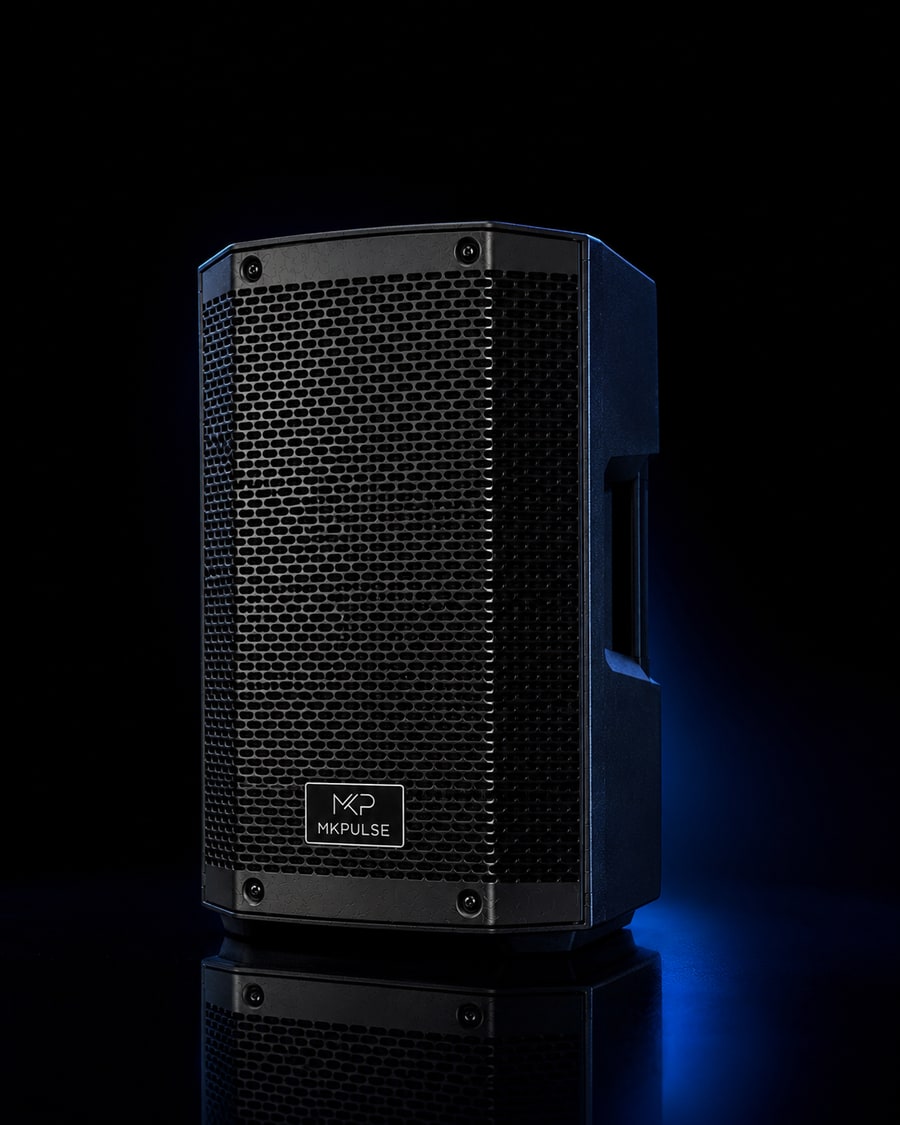
RMS is the practical figure to consider when you want to understand continuous output capability. It is the number that better reflects the kind of steady work a speaker does through a playlist, a ceremony, an announcement block, or a long afternoon event. The MKPULSE P10 is specified at 160W RMS. That gives buyers a clear reference point for the portable battery PA’s sustained power rather than asking them to infer it from a single oversized headline.
Peak describes brief headroom
Peak power describes the higher short-duration ceiling a system can handle in brief musical transients. It is still a real specification, but it is not the same thing as a continuous rating. The P10 is also specified at 500W Peak peak. Reading both figures together is more useful than treating either as a magic ranking. Music has brief hits and accents; an event also has minutes and hours of normal operation. The sustained rating and short-term headroom describe different parts of that real-world use.
A quick check before you continue
- Start at a moderate level and listen from the audience area.
- Change one setting at a time so you can hear what helped.
- Keep the setup focused on the people and the program.
Compare like with like
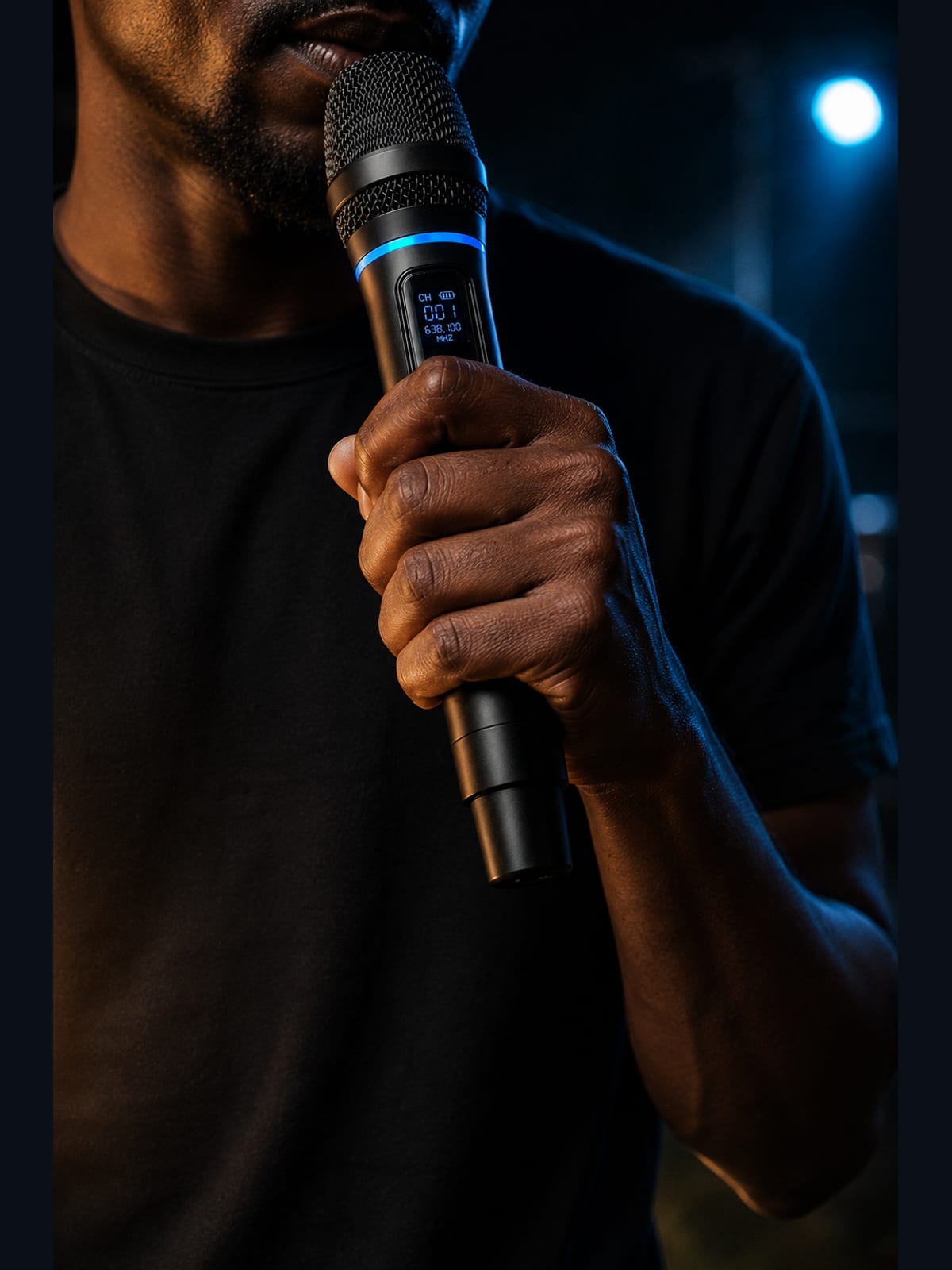
The safest comparison is RMS to RMS, then the rest of the system to the rest of the system. If one product publishes only a peak number while another provides both RMS and peak, the two headlines do not tell the same story. Ask what is included, what sources you need, how portable the setup must be, and whether microphone use is essential. The P10 includes a UHF wireless mic and carry bag, has Bluetooth 6.0, offers DSP presets, and supports TWS pairing. Those details affect whether the speaker is ready for your job on day one.
Why room size cannot be reduced to watts
A small room with reflective walls can feel loud quickly, while an open yard lets sound spread away with little help from surfaces. Guests talking, soft furnishings, ceilings, and speaker height all change what you hear. That is why choosing by a wattage headline alone often leads to disappointment. Consider whether the task is background music, a host addressing a group, a singer, or a party playlist. Then plan placement and level around that task. The P10’s portable format is most effective when it is positioned for listeners rather than simply placed where it is convenient.
The P10 specification in practical terms
The P10’s 160W RMS and 500W Peak peak specifications belong to a portable, battery-powered PA intended for flexible gatherings. Its 10-inch format, included UHF wireless mic, and carry bag make it practical where speed and mobility matter. That does not make it a substitute for a larger powered venue system in every situation, and it does not need to be. Honest planning starts with the actual event. For a compact outdoor gathering, classroom, backyard, fitness session, or mobile presentation, portability and a ready mic can be as important as the number on the carton.

Avoid the volume-at-maximum habit
A speaker set to its limit from the opening song has little room left for a louder moment, a crowd that grows, or a host who speaks quietly. Begin at a moderate level and walk the listening area. Raise the system only as much as needed for clear coverage. This approach protects the experience as much as the equipment: people can talk, the mic remains understandable, and music does not become harsh simply because the room got busier. Better setup habits produce a better result than chasing the largest number in isolation.
Use presets and sources thoughtfully
The P10’s Music, Vocal, and Speech DSP presets make it easier to begin with a sensible tonal balance for the main task. Start with Music for playlists, Vocal when vocal performance is central, and Speech for spoken-word use. Keep your phone or tablet output high enough for a clean signal but not so high that it forces you to make every other control unusually low. With a mic, test ordinary conversational speech and listen from the audience area. The goal is a balanced system, not an impressive control-panel position.

Make an informed comparison
If you are deciding between speaker types, write down the job before comparing specifications. Do you require a battery? Is a wireless mic needed immediately? Will you carry it in and out alone? Do you want two speakers later through TWS pairing? If the answer describes a mobile, self-contained setup, the P10’s complete feature set deserves as much weight as its published 160W RMS and 500W Peak peak ratings. A clear comparison is not about declaring one number superior; it is about matching equipment to the work it will do.
Read the complete specification
A meaningful specification tells you what kind of work a speaker is designed to do, not merely how large a number can be printed beside it. For the P10, the useful information includes 160W RMS for sustained output, 500W Peak peak for short headroom, its 10-inch portable battery PA format, Bluetooth 6.0, included UHF wireless mic, carry bag, DSP presets, and TWS pairing. Taken together, those facts describe a mobile speaker that can support music and speech. A single unlabeled watt figure cannot provide that same planning context.
Do not confuse louder with clearer
More power does not automatically produce a better listening experience. A speaker pointed at a reflective wall can become tiring before it becomes useful, and a mic held too far from the mouth can remain unclear at nearly any reasonable level. Start with the P10 facing the audience and select Speech, Vocal, or Music according to the task. Then walk away from the cabinet and listen from the people’s position. The most useful level is the one that carries the program cleanly while leaving enough room for ordinary conversation and event flow.
Plan for a realistic use case
A backyard talk, fitness class, community meeting, or small gathering all ask different things of a portable PA. Write down the expected group size, whether a host must move freely, and whether the event is indoors or outdoors. This turns RMS and peak from abstract terms into a useful comparison tool. If the event calls for a battery-powered 10-inch PA with a wireless mic already included, the P10’s published 160W RMS and 500W Peak peak ratings can be assessed alongside the capabilities that make the speaker workable in the first place.
Use specifications to ask better questions
When comparing portable speakers, use power ratings as the beginning of a conversation rather than the entire answer. Ask whether the stated figure is RMS or peak, whether the speaker is battery powered, what microphone equipment is included, and whether the setup can expand. For the P10, 160W RMS and 500W Peak peak are published alongside a battery PA design, Bluetooth 6.0, a UHF wireless mic, carry bag, DSP presets, and TWS. Those facts make it easier to determine whether the package fits a mobile event. A bigger unspecific number from another listing may tell you far less about how the speaker will work on arrival.
Evaluate from the listener position
A speaker comparison is incomplete until you imagine where listeners will be. In a classroom, people need words to remain intelligible at the back. On a patio, music should reach the group without making the closest table uncomfortable. At a small community gathering, a host should not need to shout into the included UHF wireless mic. Those outcomes depend on the system, the room, and the setup together. The P10’s 10-inch portable format and DSP starting points make it practical to test those outcomes directly. Choose the specification that supports the job, then use placement and sensible level to make the capability useful.
Make the final comparison
Before buying, compare the complete P10 workflow against the event you run most often. Its 160W RMS and 500W Peak peak specifications provide clear power context, while its battery PA design, Bluetooth 6.0, UHF wireless mic, carry bag, DSP presets, and TWS pairing answer the practical questions that follow. A well-matched system is easier to set up, easier to explain to a host, and more likely to be used confidently.

Choose the next right step
The best sound choice is the one that matches the job in front of you. See P10 specifications You can also compare MKPULSE speaker options or keep planning with the MKPULSE Journal.