

The move from practicing at home to supporting paid events starts with repeatable habits, not complicated gear.
The first job is usually a logistics job
Early paid events are rarely difficult because the music is impossible or the speech is complicated. They become difficult when a cable is missing, the mic was never tested, the speaker is trapped behind a table, or a load-in takes longer than expected. Backyard practice is valuable because it lets you learn the physical rhythm of an event without pressure. With the MKPULSE P10, a portable battery PA, you can practice that rhythm in the same format you will use at a patio gathering, pop-up, class, or small hosted occasion.
Build one repeatable kit
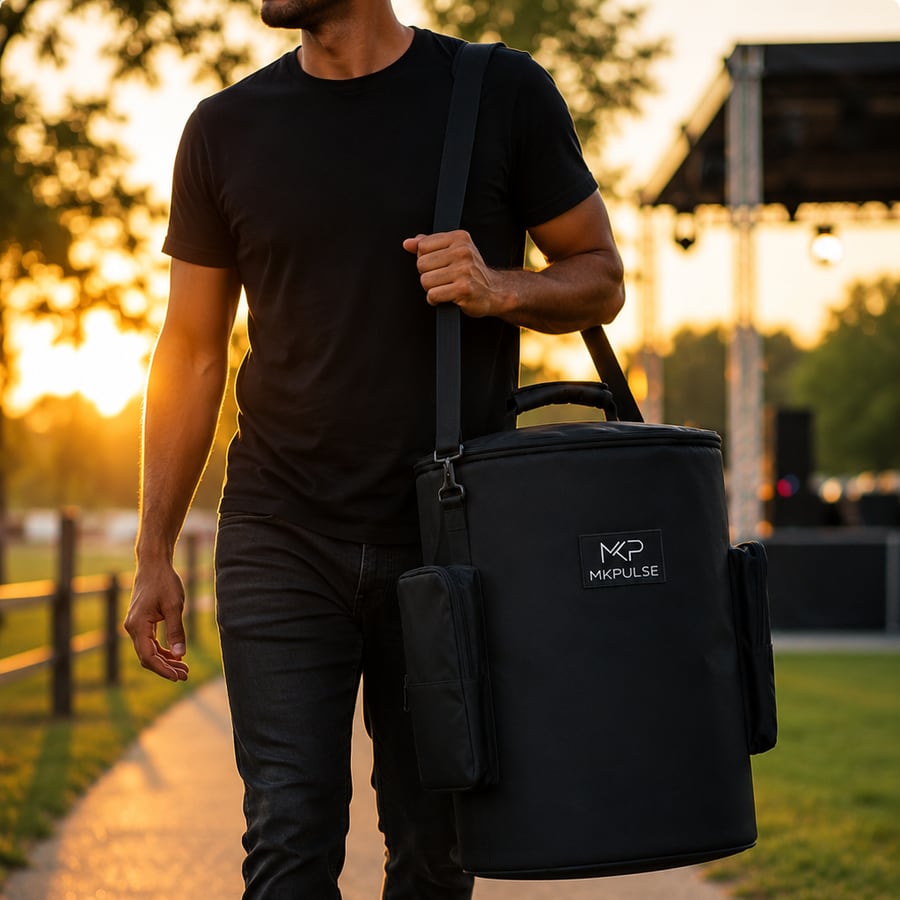
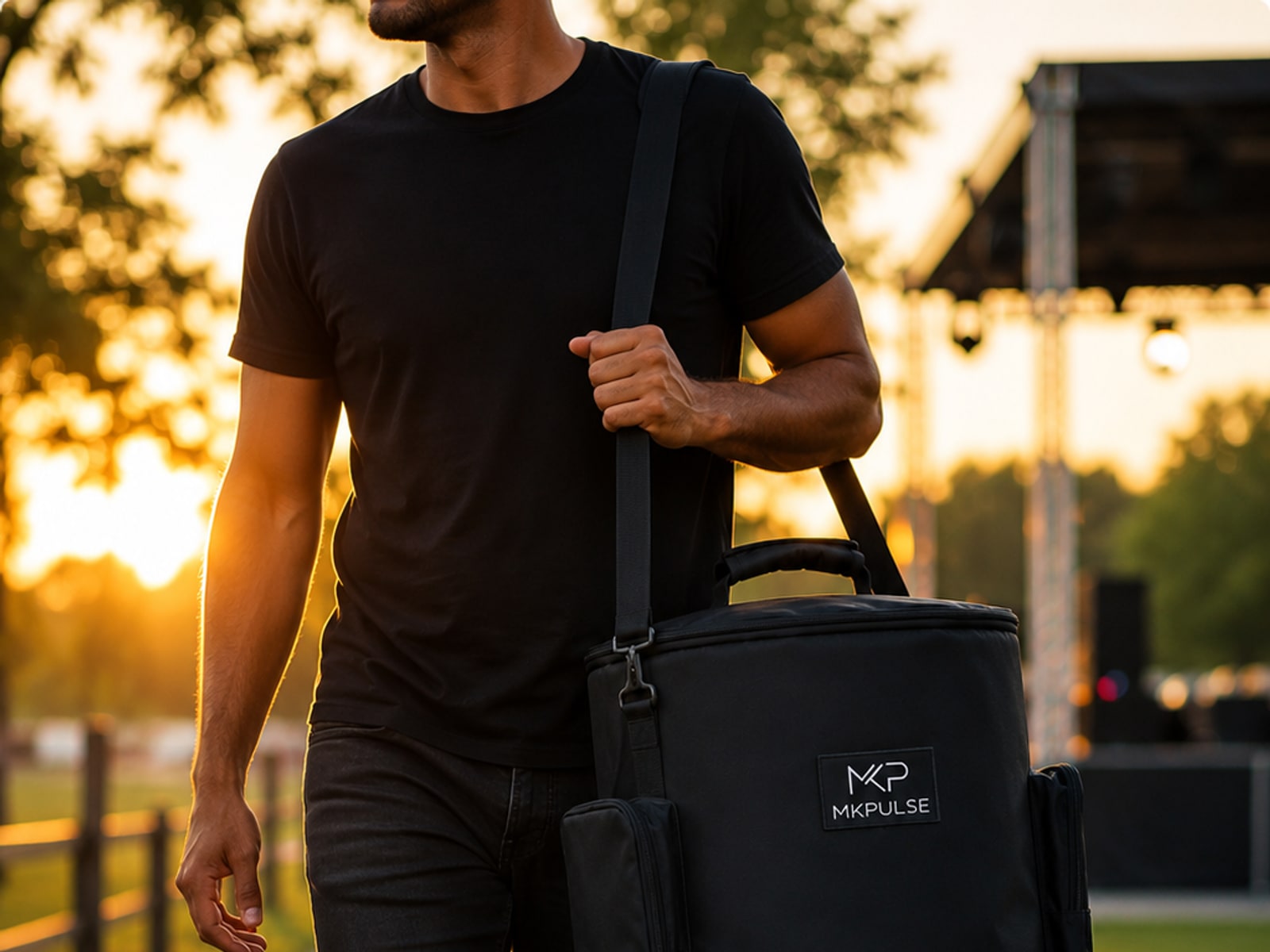
A repeatable kit makes you more dependable. The P10 includes a UHF wireless mic and a carry bag, which means the core equipment can travel together instead of becoming a collection of separate items. Keep any source cable, charging lead, and basic adapter in the same bag or case every time. Before leaving, use a short checklist: speaker, mic, source device, charged battery, music or talking points, and a plan for the room. The checklist is not excessive; it is the difference between arriving prepared and improvising under a deadline.
Practice the arrival, not just the playlist
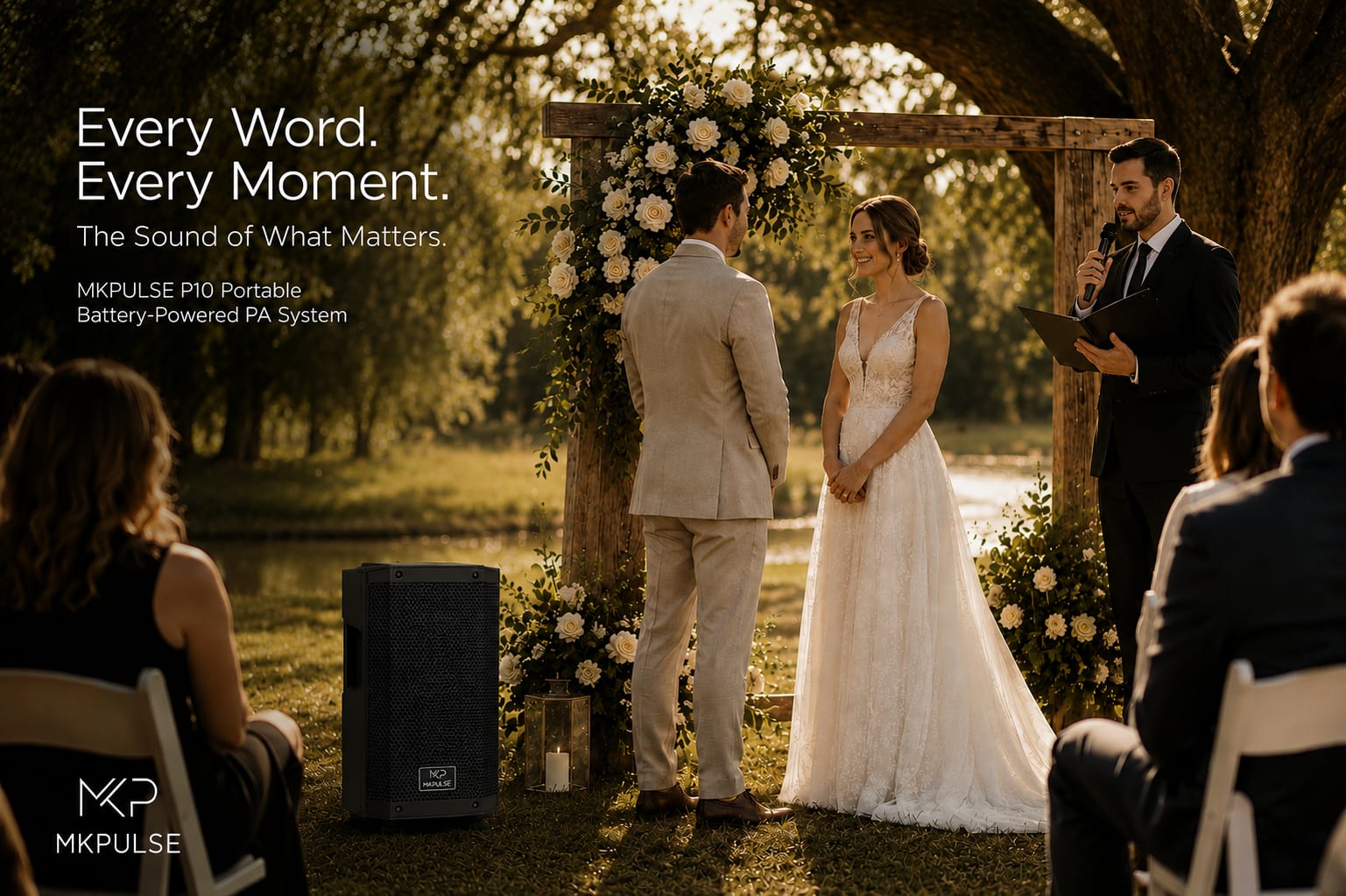
Set up in your yard as though guests are arriving in ten minutes. Choose a listening area, place the P10 where it can face people directly, turn it on at a low level, and run a brief wireless-mic test. Then connect your music source over Bluetooth 6.0 and walk the space. This rehearsal reveals small decisions that are easy to miss while standing beside the speaker. You may find that the host needs a clear place to stand, the phone needs a safe charging spot, or the speaker should move away from a wall. Those observations transfer directly to real bookings.
A quick check before you continue
- Start at a moderate level and listen from the audience area.
- Change one setting at a time so you can hear what helped.
- Keep the setup focused on the people and the program.
Give speech a dedicated check
When people pay you to support an event, spoken-word moments often matter more than the loudest song. A toast, welcome, raffle announcement, instructor cue, or quick thank-you should feel effortless to the audience. Test the included UHF wireless mic at ordinary speaking volume and listen from the farthest expected seat. Keep the mic behind the plane of the speaker and encourage the person using it to speak into it rather than holding it at their side. A calm thirty-second test protects a moment that cannot be repeated after guests have moved on.
Match the DSP mode to the program
The P10’s Music, Vocal, and Speech DSP presets make it easier to begin with the right emphasis. A playlist-driven afternoon usually starts well in Music. A singer or vocal-forward program may benefit from Vocal. Speech is the direct choice for announcements and presentations. These are practical starting points, not a reason to over-adjust the system during an event. Choose the mode that reflects the main job, check it from the audience perspective, and concentrate on gain and placement. People remember whether they could hear, not how often you touched a button.
Protect your time at load-in
Portable equipment earns its keep when it reduces decisions. The P10’s battery-powered design means you can begin with placement rather than outlet hunting, and the carry bag keeps the important pieces together between locations. Arrive early enough to make one complete setup, not so early that you repeatedly tear it down and rebuild it. Put the speaker in its final position, organize the mic and source device, then run the sound check. After that, leave the setup alone unless the program changes. A clean, stable system looks professional because it is professional.
Know when one speaker is enough
A single P10 can be a sensible choice when people gather in a compact area and the goal is clear music and speech. Do not measure success by whether every corner is equally loud. Measure it by whether the intended audience can hear comfortably without the system dominating the event. If the space grows wider, the P10’s TWS pairing capability offers a logical next step with a second unit. Two speakers can create more even coverage across a broad patio or long room, provided they are placed and level-matched thoughtfully.
Create a simple handoff
If a client, host, or family member will use the mic, explain only what they need to know: where to stand, how close to hold it, and who to ask before changing levels. Avoid giving a long technical lecture. The same applies to the source device. Keep it where it will not be bumped or taken over by guests. Your role is to make the sound portion of the event feel calm and invisible. Good preparation gives you time to welcome questions rather than troubleshoot a preventable problem while the program is already moving.

Grow by improving consistency
Moving from backyard practice to booked weekends does not require acting larger than the job. It means doing small jobs well enough that people trust you with the next one. Keep notes on what worked: speaker position, playlist length, mic use, arrival time, and what you wished you had packed. The P10 is a practical platform for that learning because it brings battery portability, Bluetooth 6.0, an included UHF wireless mic, DSP presets, TWS pairing, and a carry bag into one mobile setup. Consistency is what turns a useful speaker into a useful service.
Create an event note after every job
When you pack up, take two minutes to record what happened while the details are fresh. Note the arrival time, where the P10 worked best, which DSP preset you used, whether the mic level was comfortable, and any request a host made during the program. You do not need a production report; a few short notes will make the next similar job smoother. Over several events, those notes reveal patterns: which spaces need a second speaker through TWS, which source device behaves reliably, and how much setup time genuinely protects the event.
Set boundaries with a host kindly
A useful early conversation with the organizer is about practical expectations. Ask where people will gather, when announcements happen, whether anyone will use the wireless mic, and who can approve changes to the playlist. Explain that you will set up before guests arrive and keep the speaker aimed at the audience. This is not unnecessary formality. It gives the host confidence and lets you avoid an awkward last-minute request to move sound equipment after chairs, food, and people have filled the space. Clear communication is part of dependable service.
Make transport part of the routine
The included carry bag helps keep the P10 and its small essentials organized, but good transport starts before you lift anything. Keep a dedicated place for the UHF mic and any charging accessories, avoid stacking loose items on top of the speaker, and load the speaker last if it needs to be the first item out. At the venue, carry the complete kit in one trip when it is safe to do so. Fewer separate pieces mean less chance of leaving an important item in the car or at the previous location.
Practice the transitions that clients notice
At a real event, the key moments are often transitions: music lowering for a welcome, a wireless mic passed to a speaker, a playlist resuming after a toast, or equipment moving as the group changes locations. Practice those transitions at home with the P10 before they matter. Start a song, lower it smoothly, make a short announcement with the included UHF wireless mic, then return to music without rushing. This teaches you which controls you need to reach and where the source device should sit. The more familiar those small actions feel, the more attention you can give the host and guests instead of the speaker.
Price your preparation into the job
Even a short booking has preparation time: charging the battery, reviewing the location, loading the carry bag, confirming the start time, and allowing for a sound check. Treat that preparation as part of the service rather than invisible work. It helps you arrive calm and reinforces the value of a dependable, self-contained setup. The P10’s battery portability and included bag reduce the amount of equipment to coordinate, but they do not replace a plan. A consistent process gives clients a better experience and gives you a realistic way to decide which kinds of events you can support well.

Choose the next right step
The best sound choice is the one that matches the job in front of you. Build your mobile setup with the P10 You can also compare MKPULSE speaker options or keep planning with the MKPULSE Journal.