

“How many watts do I need for a PA speaker?” is the most common question in portable audio, and it is almost always answered badly. Marketplace listings shout a peak power number, buyers compare two of them, and the louder-looking speaker wins. Then the speaker arrives and cannot hold a room. This guide explains RMS vs peak power, how speaker wattage maps to real spaces, and which numbers to trust when you compare a powered PA speaker.
RMS vs peak power: the only distinction that matters
RMS power (root mean square) is continuous power — what the amplifier sustains hour after hour. Peak power is a brief maximum the speaker can survive for an instant, like a kick drum transient. Peak is typically quoted at two to four times RMS, which is exactly why it dominates advertising.
If you only remember one rule from this PA speaker buying guide: compare RMS to RMS. A 400W RMS cabinet and a “500W” peak-rated cabinet are not competitors. They are different product classes wearing the same sticker.
Why watts alone never answer the question
Wattage is one input into loudness, not loudness itself. Three other factors matter just as much:
- Sensitivity and efficiency — how much sound pressure the driver produces per watt. An efficient cabinet can outperform a higher-wattage inefficient one.
- Max SPL — measured sound pressure in decibels, which is far closer to perceived loudness than wattage.
- Driver size and enclosure — a 15-inch woofer moves substantially more air than a 6.5-inch driver at identical power.
This is why max SPL deserves a place next to RMS on your comparison sheet. Decibels are logarithmic: roughly every 10 dB increase is perceived as about twice as loud, and each 3 dB gain demands roughly double the power. Chasing the last few decibels through wattage alone gets expensive fast.
How many watts for your room size
Use these as honest starting points, then adjust for ceiling height, crowd density, and whether the programme is speech or music. Soft furnishings and bodies absorb high frequencies, so a full room always needs more headroom than an empty one at soundcheck.
- Speech for 20–50 people — a compact battery PA is usually sufficient. Intelligibility beats brute force here.
- Background music, 30–80 guests — a quality portable speaker placed correctly outperforms an oversized cabinet placed badly.
- Music with dancing, 80–150 guests — this is where continuous power genuinely matters and a powered 15-inch cabinet earns its place.
- Outdoors, any headcount — budget significantly more headroom. Without walls or a ceiling, you lose the reflections that reinforce sound indoors.

Headroom: the number nobody advertises
Never plan to run a speaker at maximum. An amplifier pushed into its ceiling clips, and clipping sounds harsh long before it becomes dangerous to the drivers. Aim to sit comfortably below the limit so peaks have somewhere to go. A speaker running at roughly 70 percent of capacity will sound cleaner all night than one pinned at 100 percent — and it protects your gear.
Practical consequence: buy for the largest room you realistically book, not the average one. Headroom is cheap insurance; running out of it mid-event is not.
Reading a spec sheet like a buyer, not a target
When you evaluate an active PA speaker, work down this list in order:
- RMS power — stated in watts continuous. If a listing hides this, treat that as information.
- Max SPL — in decibels, ideally with the measurement condition stated.
- Driver configuration — woofer size plus tweeter or compression driver.
- Inputs — how many, and what type. Note carefully whether a microphone is an input or an included accessory; these are different things and are frequently conflated.
- DSP or EQ modes — presets for music versus speech make a genuine audible difference.
- Power source — battery, AC mains, or both.

Where MKPULSE sits
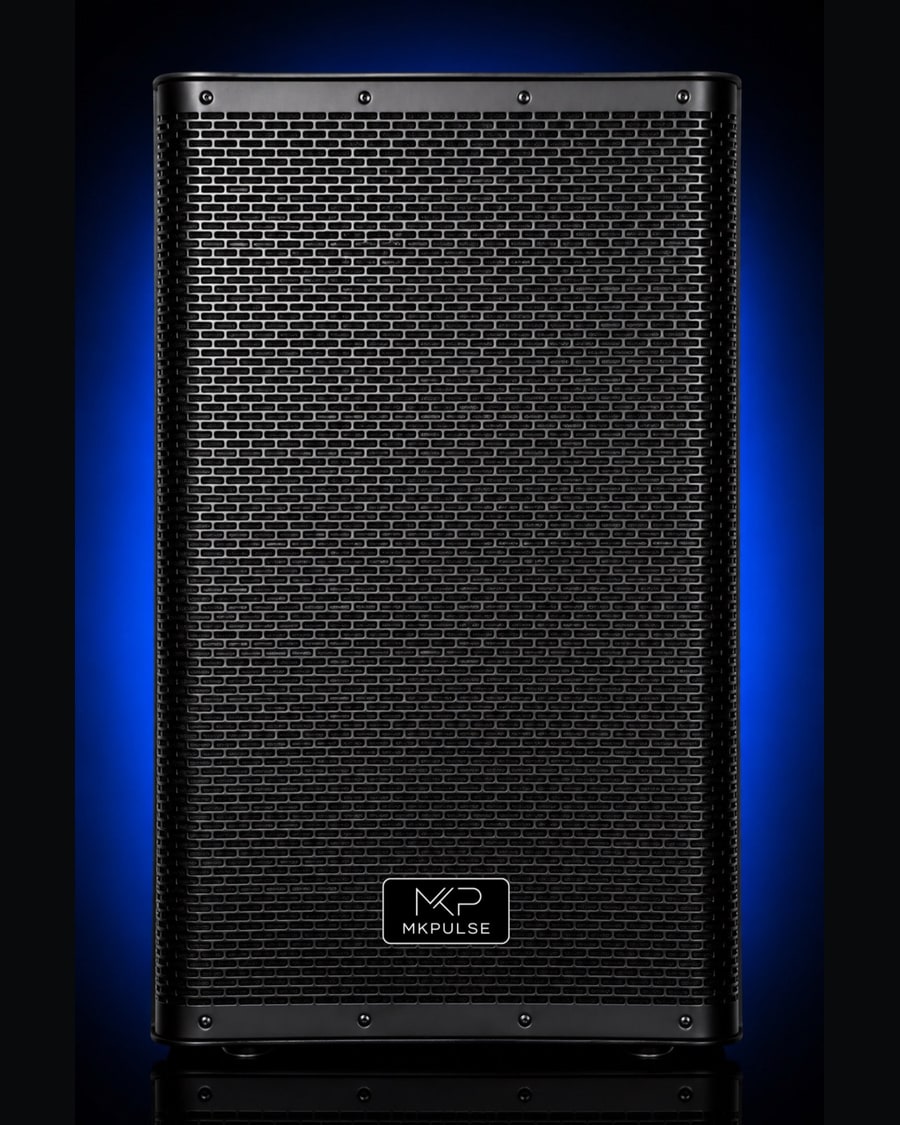
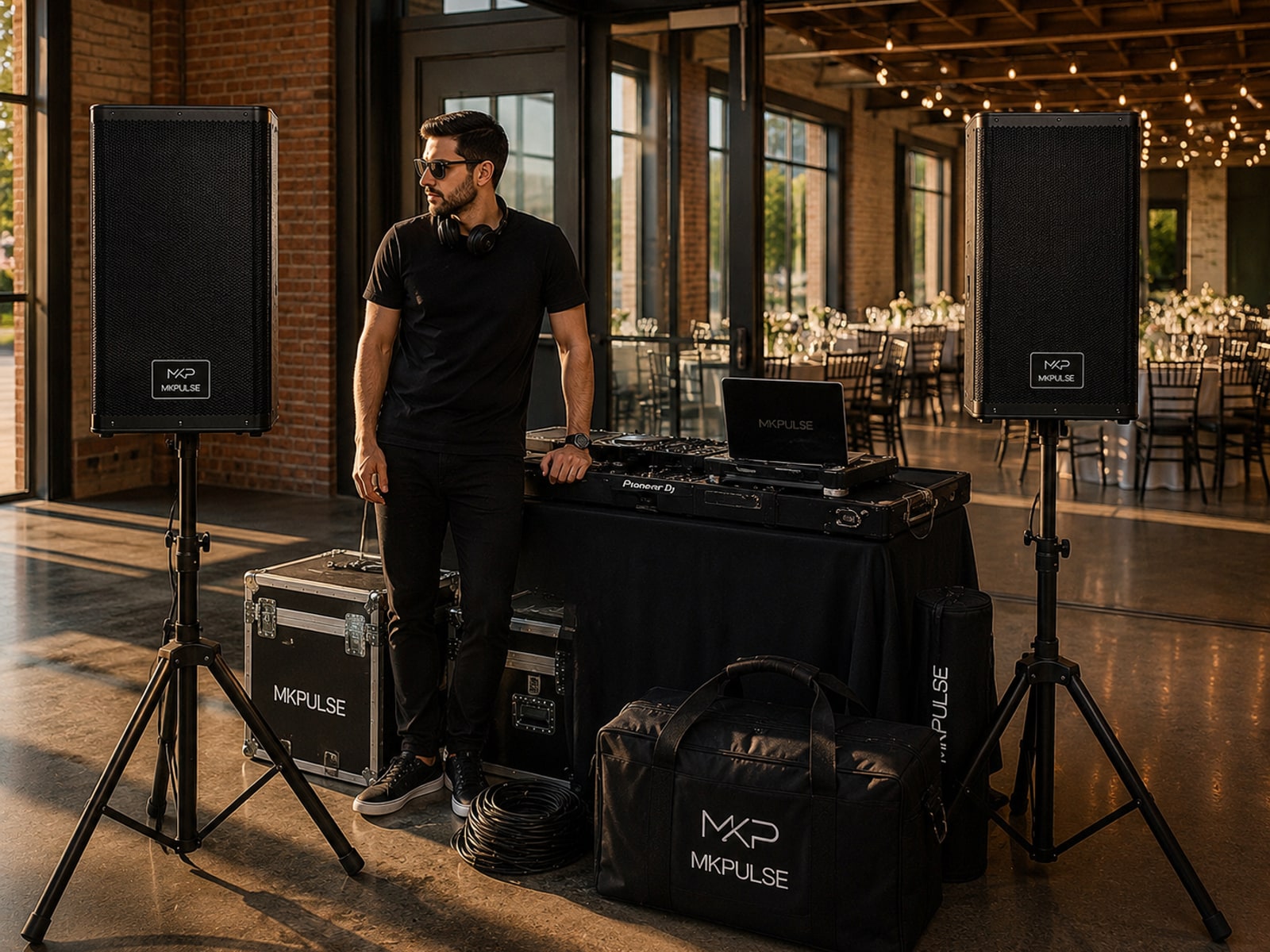
MKPULSE publishes continuous power alongside driver configuration and input layout so a speaker wattage comparison can be made honestly. The S15 is a 15-inch two-way powered PA rated at 400W RMS / 800W Peak with 132 dB Max SPL, dual XLR / 6.35 mm combo inputs, and selectable DSP modes — built for rooms that have outgrown compact portables. The P10 is a 10-inch battery PA at 160W RMS / 500W Peak for mobile, speech-forward work. The VIBE 6 uses dual 6.5-inch drivers for atmosphere and playlist duty rather than dance-floor coverage.
Matching the class to the job is the whole exercise. A bigger peak number on the box has never once rescued a badly matched speaker.
Choose the right MKPULSE speaker
- MKPULSE P10 — 10-inch battery PA for hosted, mobile events.
- MKPULSE S15 — 15-inch powered PA for dance floors and larger rooms.
- MKPULSE VIBE 6 — dual 6.5-inch Bluetooth party speaker with dynamic RGB.
- Compare all three models side by side before you decide.