

A church PA system or community hall sound system has a different priority from almost every other audio purchase. Music systems chase impact. Speech systems chase intelligibility — every word understood in the back row, by listeners of every age, run by volunteers rather than engineers. This guide covers what actually delivers that.
Intelligibility beats volume
The most common complaint in halls and churches is not "too quiet." It is "loud but I cannot make out the words." Those are different faults with different causes.
Speech clarity lives in the midrange, where consonants distinguish words. Excess bass masks that range, and reverberant rooms smear consonants into each other. Turning the volume up amplifies the problem along with the speech.
What genuinely improves clarity:
- A speech EQ setting. Music presets boost low frequencies that obscure consonants. Speech modes clear the midrange. On MKPULSE models with DSP presets, this single change is the largest audible improvement available.
- Shorter distance from mouth to microphone. Nothing else comes close in effect.
- Speakers closer to listeners. Distributed moderate level beats one distant loud source, especially in reverberant halls.
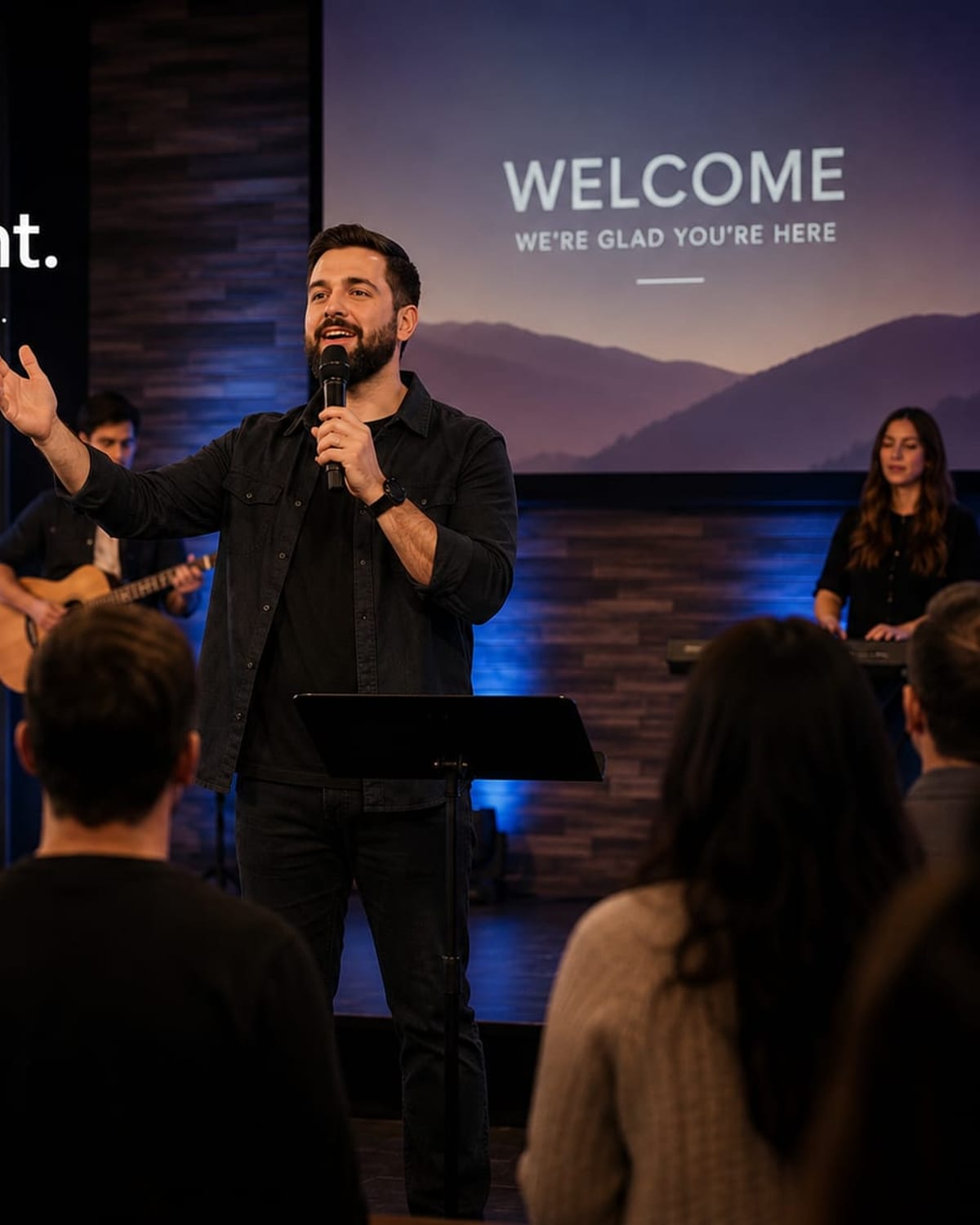
Microphone choice for speech
The microphone matters more than the speaker for speech, and it is where most budgets are misallocated.
- Handheld wireless — the most flexible option for readings, announcements, and passing between speakers. Requires a brief word on technique: keep it close, and do not point it at the speaker cabinet.
- Wired handheld — reliable and inexpensive, best where the speaker stays in one place.
- Multiple microphones — increases feedback risk considerably. Mute what is not in use; this is the discipline that separates smooth services from difficult ones.
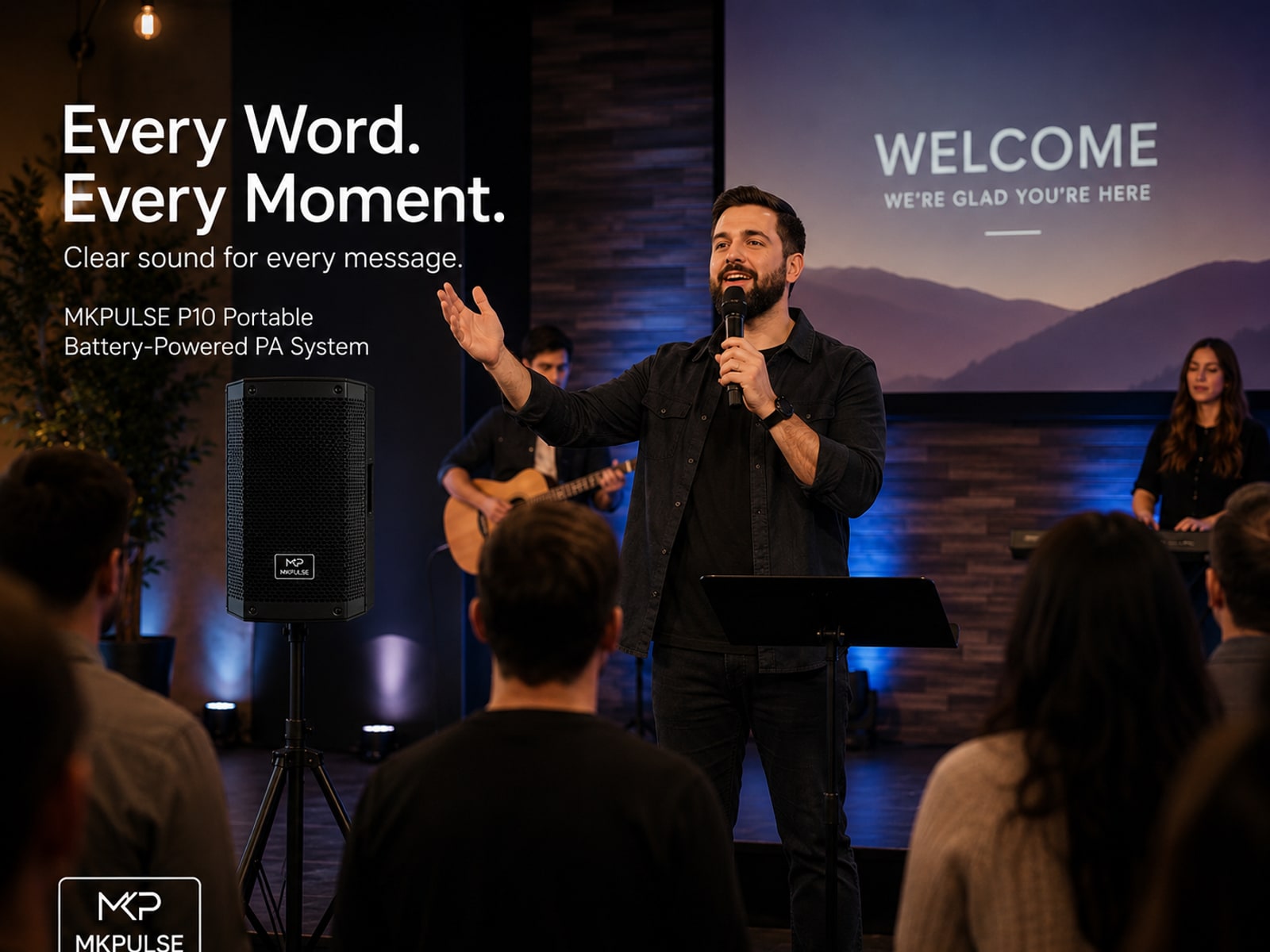
The P10 suits this application because it arrives as a working kit: a 10-inch battery PA with a UHF wireless microphone system and a padded carry bag in the carton, plus a speech DSP preset. For a volunteer-run setup, "everything needed is in one bag" has real operational value — there is no separate mic purchase to specify, source, and remember.

Speaker placement for feedback control
Feedback is not mysterious. It occurs when a microphone hears the speaker it is feeding. The geometry is entirely within your control.
- Speakers ahead of microphones, always. Cabinets forward of the speaking position, facing the audience. This is the single most effective rule.
- Never behind the speaker. A microphone behind the speaker plane will ring.
- Elevate cabinets. Tweeters near standing ear height, angled slightly down over the audience.
- Away from hard reflective walls. Reflections return sound to the microphone by an indirect path.
- Reduce open microphones. Each live mic adds feedback risk.
If feedback persists after geometry is correct, reduce microphone gain and move the microphone closer to the mouth. Improving the source is more effective than fighting the symptom.
Setups volunteers can run
A system nobody can operate confidently is a failed system regardless of specification. Design for the person who will actually switch it on:
- Mark working positions on volume controls so a correct setting is obvious.
- Write a one-page setup card and keep it with the equipment.
- Choose fewer components. Every extra box is another failure point and another thing to explain.
- Keep spare microphone batteries with the kit, not in a cupboard elsewhere.
- Use portable gear that packs into a bag if the hall serves multiple purposes.
Multi-purpose rooms are the normal case rather than the exception. A hall hosting a service in the morning, a community lunch at midday, and a hired event in the evening is better served by a portable kit than a fixed install nobody can reconfigure.
Taking it outside
Outdoor services, fetes, and car-park gatherings remove the walls that were helping you indoors. Sound travels away instead of reflecting back, so plan for more headroom and move speakers closer to listeners. Battery operation stops being a convenience and becomes a requirement, since outlets are rarely where you need them. Keep the wind behind the microphone where possible — wind noise across a capsule is very difficult to correct afterwards.
Shared ground with hospitality venues
Restaurants, function rooms, and community halls face the same underlying problem from opposite directions: rooms that must handle both background atmosphere and clear speech, run by staff or volunteers rather than technicians. The solution is the same in both cases — a speech-capable PA with a proper microphone path for hosted moments, kept separate from whatever handles background music. Trying to make one speaker do both jobs well is where most disappointment originates.
Full specifications for each model are published on the product pages, with free PDF spec sheets available for download if you need to circulate them to a committee before deciding.
Choose the right MKPULSE speaker
- MKPULSE P10 — 10-inch battery PA for hosted, mobile events.
- MKPULSE S15 — 15-inch powered PA for dance floors and larger rooms.
- MKPULSE VIBE 6 — dual 6.5-inch Bluetooth party speaker with dynamic RGB.
- Compare all three models side by side before you decide.