

Searching for the best speakers for DJing or building a first mobile DJ setup means answering three questions in order: what class of speaker, how many, and how you connect them. Get that sequence right and a modest rig sounds professional. Get it wrong and expensive gear still sounds amateur. This DJ speaker setup guide walks the decisions a working DJ actually faces.
Why DJs need powered PA speakers, not party speakers
A powered PA speaker (also called an active PA speaker) has the amplifier built in. You feed it line level from a mixer or controller and it handles the rest — no separate amp, no speaker wiring, far less to fail at load-in.
The distinction that matters for DJ work is duty cycle. A Bluetooth party speaker is designed for atmosphere at moderate levels. A powered PA cabinet is designed to run near performance level for hours without thermal compression flattening the mix. When a dance floor fills, that difference becomes obvious within the first thirty minutes.
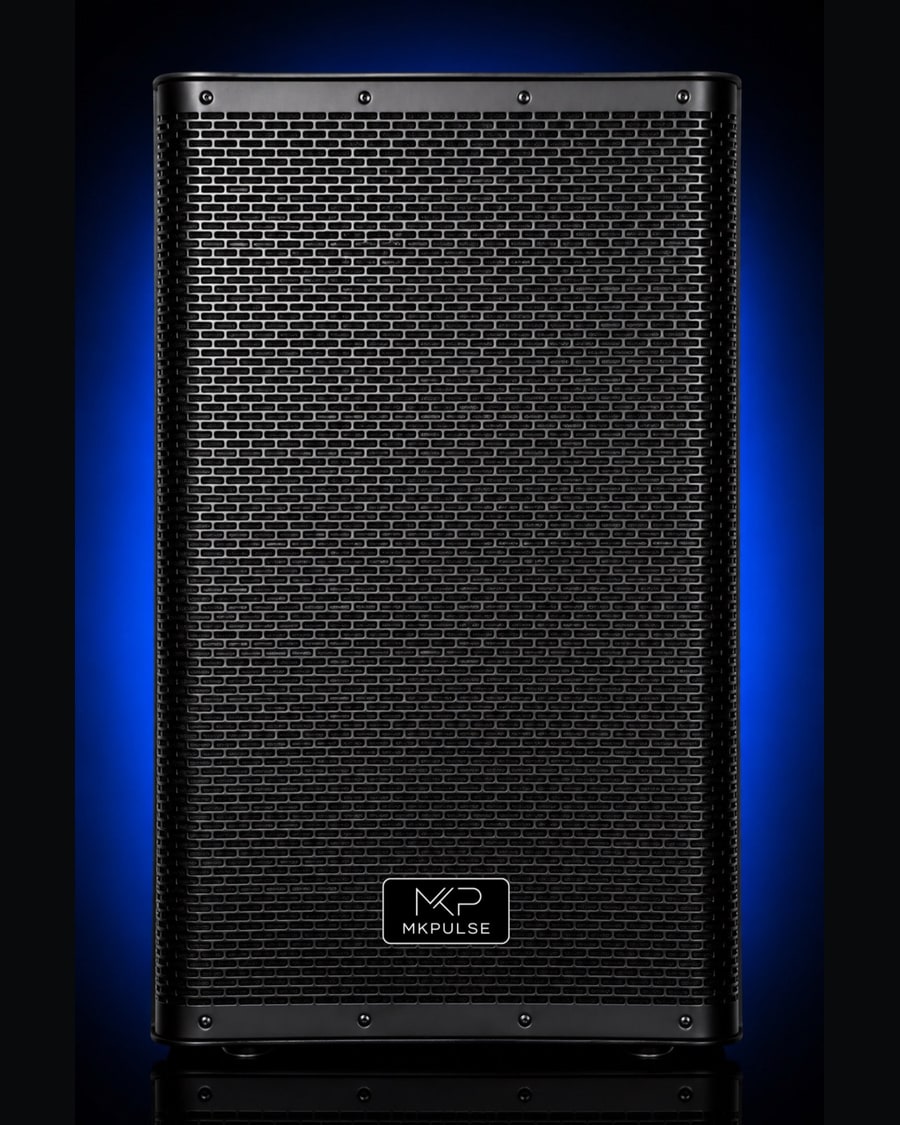
How many speakers do you need?
- One speaker — acceptable for compact rooms and speech-led events. Coverage is uneven; guests near it get considerably more level than those far away.
- Two speakers — the working standard. Stereo image, even coverage, and headroom in reserve. This is the default for weddings and club-style bookings.
- Two plus a subwoofer — add low-end extension once you regularly book larger dance floors and bass-forward genres.
If budget forces a choice between two capable speakers and four cheap ones, take the two. Coverage problems are solved by placement, not by quantity.
Speaker placement and stand height
Placement is the highest-return, zero-cost improvement available to you.
- Get cabinets on stands. On the floor, mid and high frequencies fire into legs and get absorbed. On stands, the tweeter should sit near standing ear height.
- Angle inward slightly. Aim across the audience rather than at the back wall — you reduce slap-back reflection and even out coverage.
- Keep speakers ahead of microphones. If you use a mic, positioning it behind the speaker plane is the single most reliable way to avoid feedback.
- Leave breathing room from corners. Corner loading exaggerates bass unpredictably and muddies the low mids.
- Widen with the room. Wide rooms need wider spacing; narrow rooms need tighter spacing or you will create a hole in the middle.

Connections: what to use and what to avoid
For a DJ set, run balanced XLR or 6.35 mm TRS from your mixer or controller to each speaker. Balanced cable rejects interference over distance, which matters in venues full of lighting rigs and mains runs.
Use Bluetooth for background music before doors and during breaks — it is genuinely convenient for that. Do not perform a set over Bluetooth. Latency and compression are real, and a dropout during a peak moment is unrecoverable. Cable is not old-fashioned here; it is the professional choice.
The S15 provides dual XLR / 6.35 mm combo inputs, which is enough to take a mixer feed and a second source without an external splitter. Note that these are inputs — connection points for sources you supply — and should not be read as microphones being supplied with the speaker.

Gain staging for a clean set
Most “bad sound” at mobile gigs is a gain problem, not a speaker problem. Work in this order:
- Set your controller or mixer master to its nominal operating level — not maximum.
- Bring each speaker's input level up until the room is comfortably loud.
- Leave the speaker below its limit so peaks have headroom. If a limit indicator is flickering, you are already too hot.
- Only then reach for EQ, and cut problem frequencies before boosting anything.
If you need more level and have run out of room, the honest answer is more speaker, not more gain. Pushing a cabinet into clipping trades fidelity for volume you do not actually gain.
A soundcheck routine that takes five minutes
Play a track you know intimately — one you have heard on dozens of systems. Walk the full floor: the front, the back, both edges, and the bar. You are listening for coverage holes and for bass build-up in corners. Then talk-test any microphone from the position it will actually be used. Do all of this before guests arrive, because a full room sounds measurably different from an empty one.
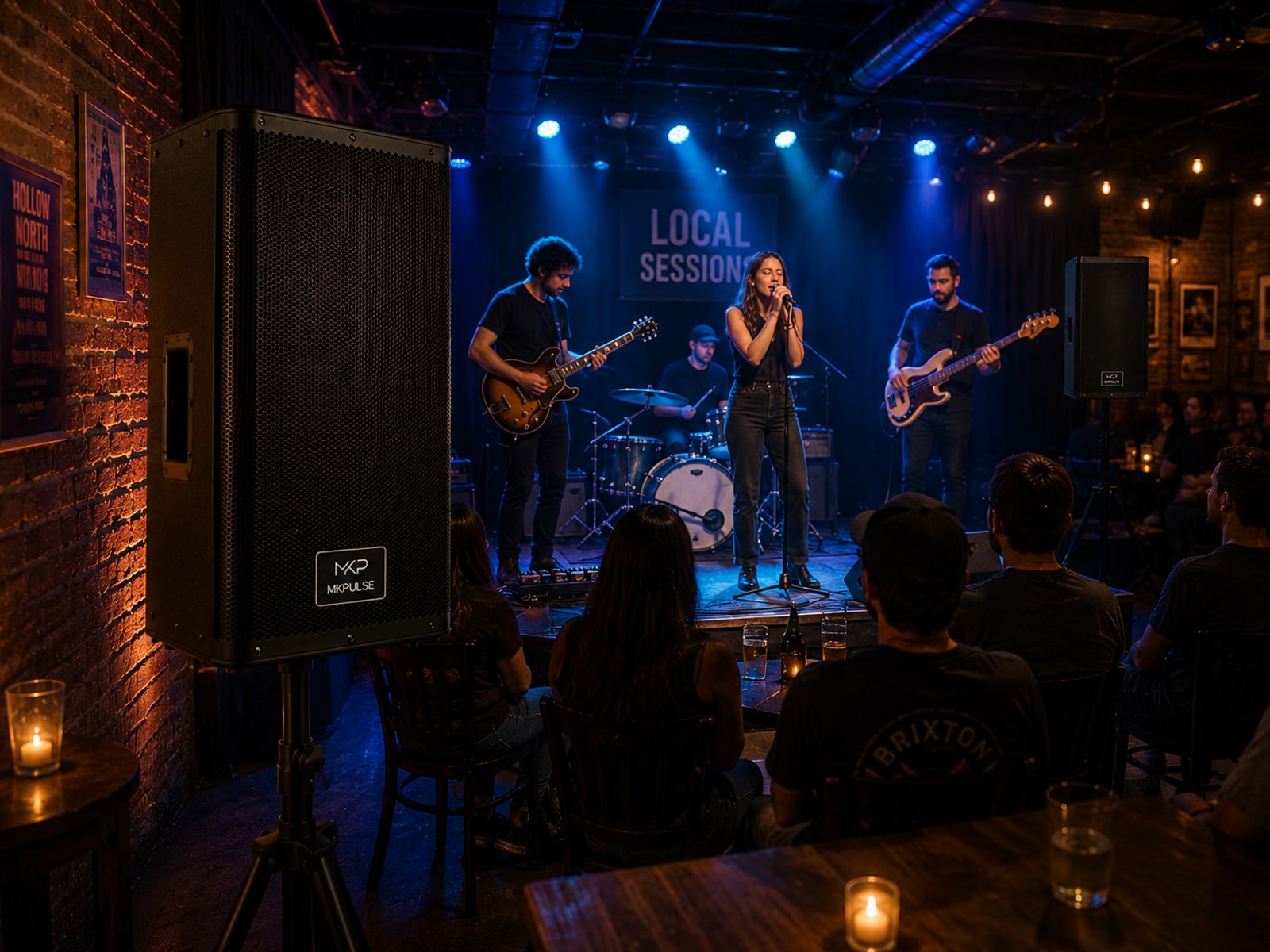
Choose the right MKPULSE speaker
- MKPULSE P10 — 10-inch battery PA for hosted, mobile events.
- MKPULSE S15 — 15-inch powered PA for dance floors and larger rooms.
- MKPULSE VIBE 6 — dual 6.5-inch Bluetooth party speaker with dynamic RGB.
- Compare all three models side by side before you decide.